
A focus on…..Cerinthe
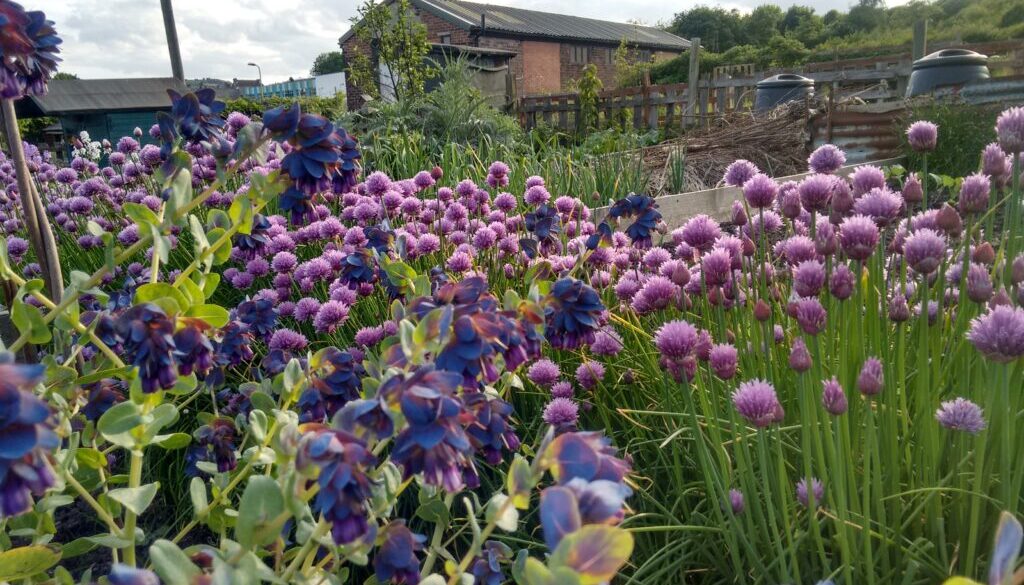
Cerinthe major ‘Purpurascens’ to give its full mouthful of a name or commonly called Honeywort or waxflower. Cerinthe comes from the Greek kerinos which means waxen, which describes its waxy foliage which is very fleshy. It is always on the list for my cutting garden, such a great plant in many ways. A versatile cut flower and also a real magnet for bees and other pollinators so a double whammy. Its a plant people always ask about in your garden.
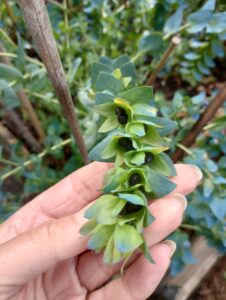
They are from the Mediterranean and so this will tell you that they like a sunny spot in your garden but they are also fairly drought tolerant and can cope with poorer less fertile soil. It will often self-sow in your garden but its also easy to collect seed from it. On the photo below you can see clearly the large black seeds (in pairs) along the stem, they will be ripe as they start to fall off the stems.
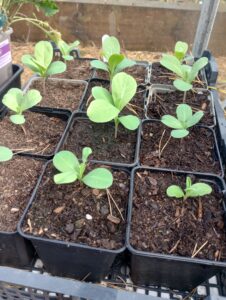
Autumn sowing is recommended for an early harvest the following spring, I sometimes lose some in a particularly cold and wet winter but there are usually enough self-sown seedlings around to fill any gaps. They can also be sown in Spring, and its definitely useful to do multiple sowings so that you can get an extended season for cutting. I’ll be doing another sowing in early March. The seeds are nice and big so I sow into modules, they need a bit of warmth for germination but are reliable. Plant out roughly 25-30cm apart. See the Higgledy Garden seed sowing guide for more information.
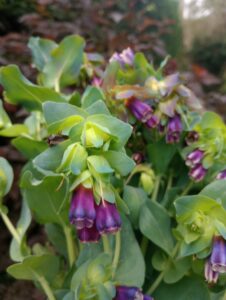
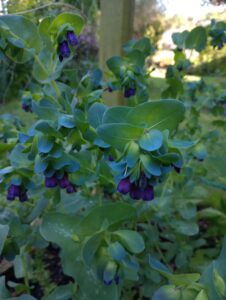
It’s a really unusual flower, how to describe it….. bluey green leaves with nodding heads of dusky purple bracts and rich dark purple bell shaped flowers with a pale rim to the bells. A real irridescent mix of colours. She’s the shy one in the cutting patch, keeping her head down but she can really make an impression in your arrangements. Though it has to be said that these are the fillers in your arrangement, grown for the foliage colour which brings life to an arrangement and it seems to go with both a rich vibrant colour scheme and also a paler pastel vibe.
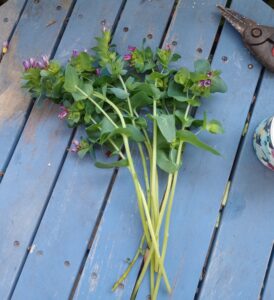
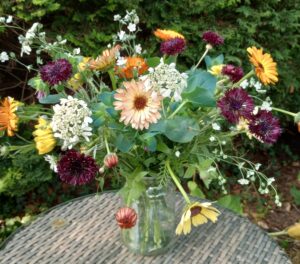
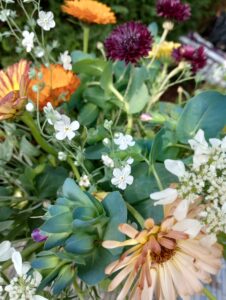
Due to their fleshy foliage searing is required to stop it flopping in the vase, nothing complex about this just boil some water, put it in a cup or bowl and then after you have cut your stems hold the bottom of the cut stems in the boiling water for 10 seconds or so and then put straight into your bucket of cold water. It can be revived in this way after its flopped. In your arrangements the flowers should last at least a week. Here in an arrangement with Calendula ‘Indian Prince’, Orlaya grandiflora, Cornflower ‘Black Ball’ and Omphalodes linifolia ‘Little Snow White’.
Even if you don’t want flowers for cutting this is a really useful plant for your garden as the bees really truly love it. Last year I had a patch in a raised bed right in front of the door to my potting shed and I could hear the hum of the bees from inside and would often get distracted, go and sit on the step and just watch the busy bees going to and from the flowers. The flowers produce prodigious amounts of nectar, hence the name Honeywort.
So if you want a garden buzzing with bees then this is a plant for you.
Happy sowing.
Higgledy Anne
(I’m on Instagram anne_hinks if you fancy a follow)