
A simple guide to autumn sowing of hardy annuals
We are stepping into the first days of autumn and I’m happy, I love autumn, soon we will notice that first nip in the air, out will come those cosy jumpers and cardigans, the soup pan will come out of the cupboard, I’ll be shutting the curtains early in the evening and getting cosy on the sofa with a cat on my lap and a good book. You have to cherish those special days when the skies are blue and leaves on the trees are changing to glorious shades of yellows, oranges and reds. The lower light is just so beautiful and its cooler too which is most thankful after the scorching summer we have had. Crunching through the fallen leaves, autumn just has its own smells and scents. I want to get back in the garden again and get busy but its certainly not about putting the garden to bed. January might be the time for new years resolutions but September for me is when I start my new gardening resolutions. Its a time to step back and look at your garden and how it has been this year, what was successful and what was not. What do you want to grow next year and what are you going to give up on for a while at least. For me its when I really start planning for my flower garden next year. Its the time to order spring flowering bulbs, you might want to order some bare root plants for your borders or be thinking about what you can move around in your own garden. Some plants may have got too big and need dividing or you might decide a plant needs to go that is just not thriving. Its a great time to be planting perennials. Obviously the last two summers have been tough on our gardens with prolonged droughts, heatwaves and for some people hosepipe bans. It has made lots of us think about what we grow and what plants do well and perhaps rethink some of the plants in our gardens.
I love sowing annuals, they add so much to my garden and give me lots of flowers for cutting and I wouldn’t be without them but it has become clearer to me each year how useful autumn sowing is. Many people only really associated seed sowing with the spring, after a cold winter you get sowing once the weather has warmed up, they flower in July and August, but this is now when we are finding the warm, dry weather kicking in. Some of the hardy annuals may struggle and flower quickly rushing to set seed. I want to get my flowers earlier in late spring and early summer and the key to that is autumn sowing. You then keep them ticking over through winter, plant earlier in the spring when the ground is still moist and starting to warm up and then they get growing quickly and flower in late May, early June when the weather is still cooler.
So this is a simple guide to sowing annual seeds in autumn, which seeds can you sow, how to do it and the best varieties I’ve found for autumn sowing.
So not all annuals can be sown in the autumn its only the hardy annuals that will survive the cold winter frosts, so not your tender ones like Cosmos, Zinnias and Sunflowers, but those stalwarts of the cutting garden, like Cornflowers, Nigella, Cerinthe, Ammi, Orlaya, Larkspur and Corncockle. To be fair you need to sow them before autumn really kicks in but September is a perfect time, the soil is still warm and we usually get more rains now so the soil is moist. Perfect conditions for seed germination. But you need to be prepared to experiment (what works in one persons garden may not necessarily work in yours), depending on where you are in the country and how bad a winter we have, you may lose some things but over the last few years of autumn sowing I know certain annuals that really do well for me in my garden. There are a few others which I’ve found to be borderline hardy for me and some years I’ve lost them, so Calendula and Godetia can be a bit hit and miss. My garden is in the north-west of England, we can get very hard frosts and some years lots of rain, further down south you may be able to grow these and other hardy annuals easier which is why I say that you need to experiment a bit and see what works for you in your garden. Also I have an unheated greenhouse in my garden and can give some things a bit of protection but it still can get down to minus 10 and below in my greenhouse. I’ve found that seedlings and young plants can cope with the odd really cold night but its when we have a prolonged very cold spell that can cause problems so on really cold days I have some fleece that I use to cover plants. But you don’t need a greenhouse for many of the hardy annuals, you can sow them now, grow them on a bit and then get them planted in October, they will stop growing over winter and then start again in the spring when it warms up. I do a bit of both, plant some out in October and keep some in my greenhouse over winter.
But the real advantages can be found in the spring when you have good chunky plants to plant out or sturdy plants already in the soil which soon get growing as the days get longer. They produce sturdier plants which flower earlier in late spring before it starts getting too warm. It also means I have less to sow in the spring when it can be a bit crazy busy.
I like to sow in early to mid September and I don’t tend to sow directly into the beds in my garden apart from a few things like Nigella and Daucus carota. I’m going to set aside one raised bed to sow the autumn seed sowing mix this year. Here I will just clear the area and just broadcast sow the area I want to cover, cover light with compost and keep an eye on them once germinated. Thin out if the seedlings are too close together. For most other seeds I prefer to sow in seed trays or modules, prick out and pot on into 9cm pots as needed, but my advice would be to just figure out what works best for you. Just sow some of the seed. Then wrap it up and save it, just sow what you need, you can save the extra seed for a spring sowing if needed or for next year. Once the seedlings develop I prick them out into 9cm pots and only prick out the number that I need (plus a few extras). Try and keep them cool and steady temperatures so that they grow steadily and then if we do have the odd early frost you feel they can cope with it. For more details on sowing the specific varieties see the Higgledy Garden Seed sowing guide. I plant them out in March or April depending on the weather and they soon get growing well and flower in late May, early June often with the biennials.
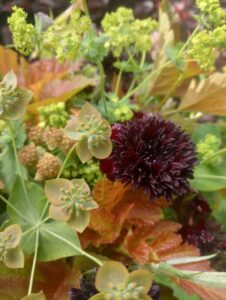
Here are a few of my favourite for autumn sowing, first and foremost are the Cornflowers, I just don’t think you can beat them and they have never failed to come through even the most cold winters. You get lovely sturdy plants which grow much taller than spring sown ones and start flowering in May. You can keep picking them until at least July, longer if you are ruthless about dead-heading them. I love them in bud and in flower so I pick nice long stems with both on, they are airy within a posy and easy to prepare and condition for a flower arrangement. If you just want them in the garden for colour then they have a lovely silvery foliage and the bees and other pollinators love them. We have many cultivars but my real favourites are Cornflower ‘Black Ball’ and ‘Blue Ball’ the single colour cultivars. But for a fabulous mix of colours Cornflower ‘Classic Magic’ has a mix of purple, lilacs and mauves and Cornflower ‘Classic Romantic’ has a mix of pinks and white.
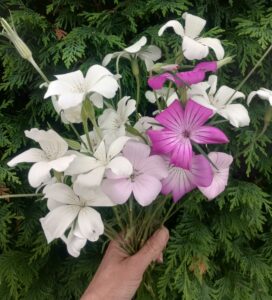
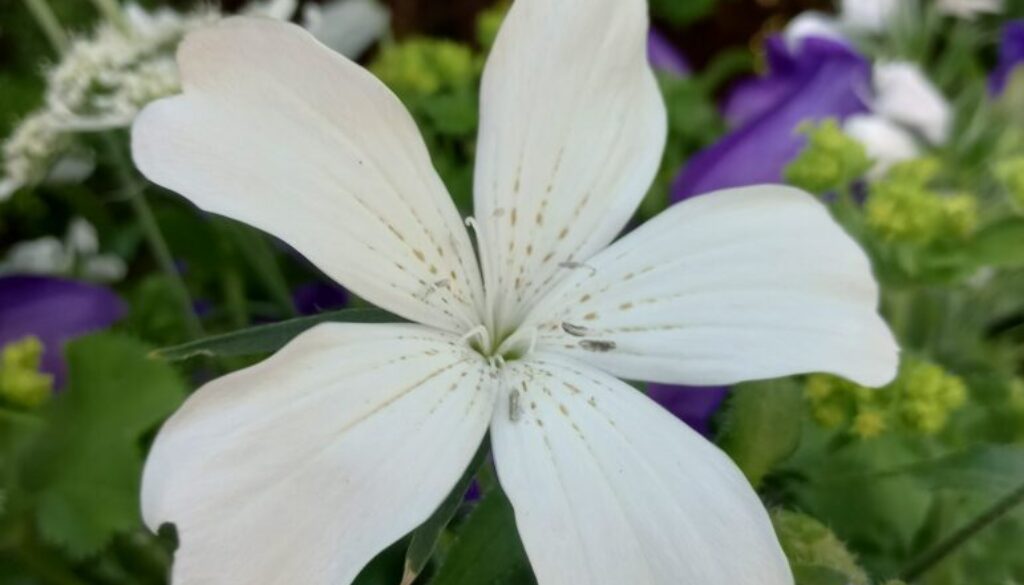
Next on my list are the Corncockles, we have the pink form, Corncockle, and the more refined Corncockle ‘Queen’ which has larger flowers in a range of whites, pale pinks and dark pink. These have been totally reliable through recent winters are produce, lovely tall plants with airy stems of flowers. Which combine well with other flowers at that time Cornflowers, Sweet William, Hesperis and Orlaya. I have found that they can be real stars in my arrangements with their big flowers.
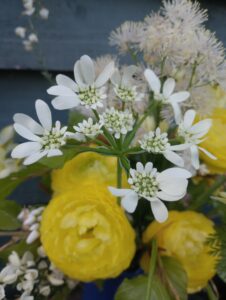
Orlaya is another one I sow in the autumn, these delicate white cow parsley white flowers are tough as old boots. They can be tricky to get to germinate but I’ve found that you really need fresh seed and so I tend to just collect my own of these. They can also germinate erratically over time so I tend to sow in a seed tray with plenty of space so that you can prick out any early birds and leave the others to develop in the seed tray. I let flower and then collect the seed for the following year.
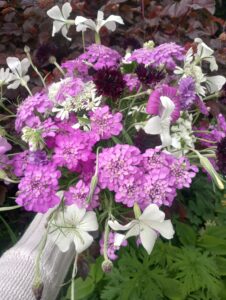
Candytuft ‘Crown’ is a relatively new flower on my list for autumn sowing but for the last two years they have grown well and flowered beautifully when combined with Orlaya. They flower in a range of colours from white, up to pale pink and then dark pink.
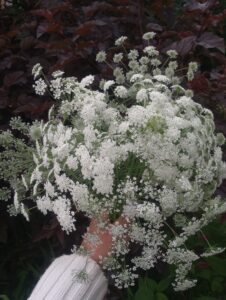
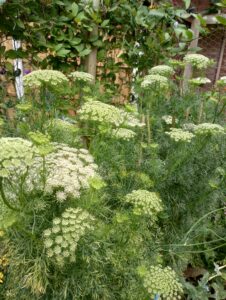
Ammi majus and Ammi visnaga, another pair on the list. I always much preferred Ammi visnaga but this year I gained a new respect for Ammi majus, which I dotted through my borders which added a real frothy joy to the garden.
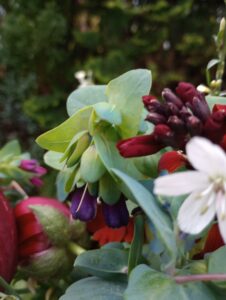
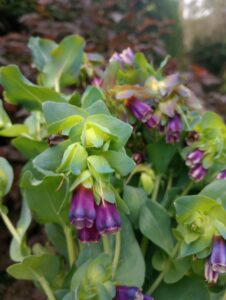
Cerinthe, love love love these glaucous blue flowers and so do the bees so even if you don’t want to grow this flower for cutting grow it for the bees. It hums with bees in the spring. I just spotted a few self seeders in my garden the other day which is great but I will also sow some as well.
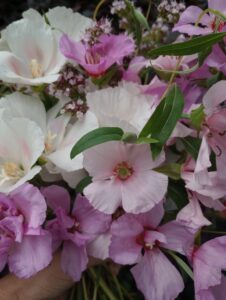
Godetia, I had good success with autumn sowing of these last year and loved having big bunches of these bright cheery long lasting cut flowers.
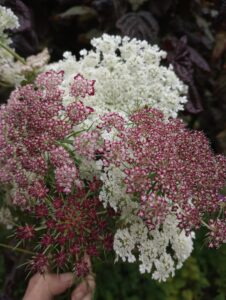
Daucus carota ‘Dara’, another good one for sowing direct but if like me you haven’t always got that free patch to sow into you can also sow it into seed trays. The trick though is to sow thinly and to prick them out quickly so that its tap root doesn’t get congested.
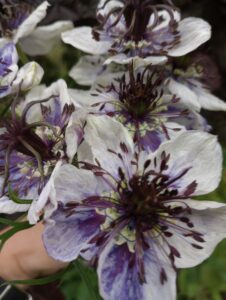
Nigella ‘Delft Blue’, my favourite Nigella cultivar, these are best sown directly and its good to get them sown as early as you can to give them time to germinate and get their roots down and established before it gets cold again. Again I’m hoping my plants will self seed from my previous sowing.
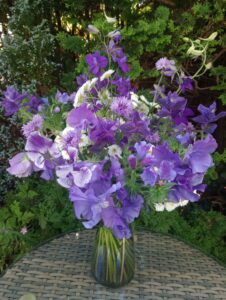
Larkspur ‘Imperials’, is a great mixture. I vary between sowing these in very late winter early spring or autumn and both can be useful, these do well from direct sowing too and this year I ended up with better self seeding plants, compared to ones I sowed in the greenhouse. But experiment and see how you do. Larkspur seeds can often need a cold spell to break their dormancy and its suggested that you out the seed packets in the fridge a couple of weeks before sowing. To improve chances you could mix some seed with some damp vermiculite in a plastic bag and put that in the fridge for a couple of weeks and then spread the whole mix on to a seed tray. This was a successful strategy at Bluebell cottage nursery for seeds that needed cold to break their dormancy.
Anyway I hope I’ve inspired you to have a go at sowing hardy annuals and see the advantage of sowing so that you get earlier flowering plants in late spring well before any spring sown plants. They will develop into good sturdy plants often taller and more robust and able to cope with the weather. It also means there is less work to do in the spring when its already a bit manic with lots of other seed sowing going on so it really spreads the load. So get ready to do some autumn sowing and fill your gardens with flowers and joy next spring!
Higgledy Anne
(I’m on Instagram anne_hinks if you fancy a follow)