
Sweet pea sowing guide
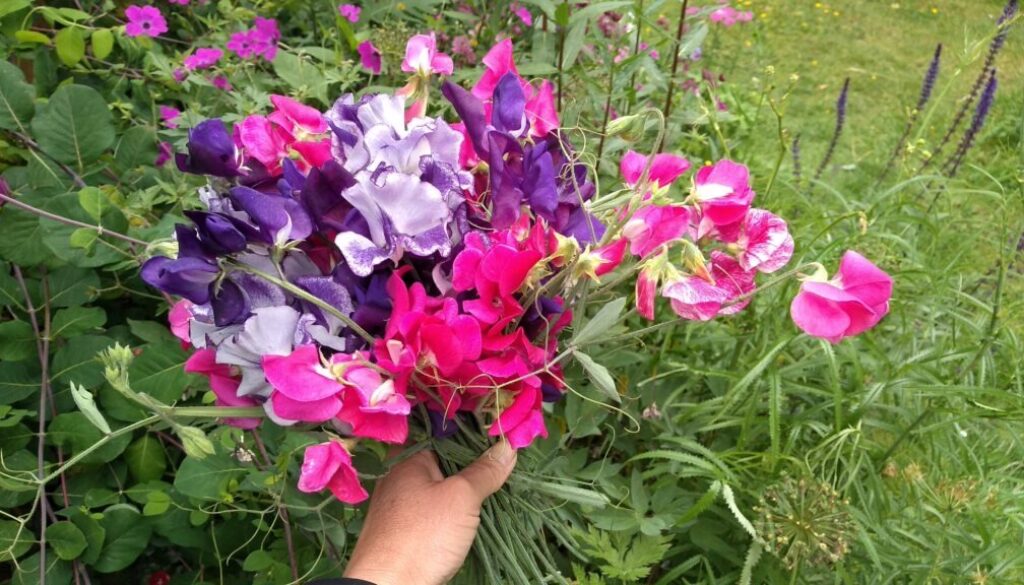
Just close your eyes and think about the scent of summer, it could be the smell of freshly cut grass, the fruity coconut smell of suncream or the smoky smell of your neighbours BBQ but for me I know summer has arrived when I can plunge my nose into a big bunch of sweet peas. I love the scent of sweet peas, its not too overpowering, a clean floral scent, delicate but strong enough to waft around my home when I place a bunch on the kitchen dresser or my bedside table. The frilly blooms exude romance, they are so floriferous and easy to grow. When I got my first allotment many years ago they were one of the first things I grew as a cut flower and my love of flowers and flower arranging has blossomed since then. They are a must have in my garden and cutting patch and the growing of them is a big part of the seasonal jobs in my garden.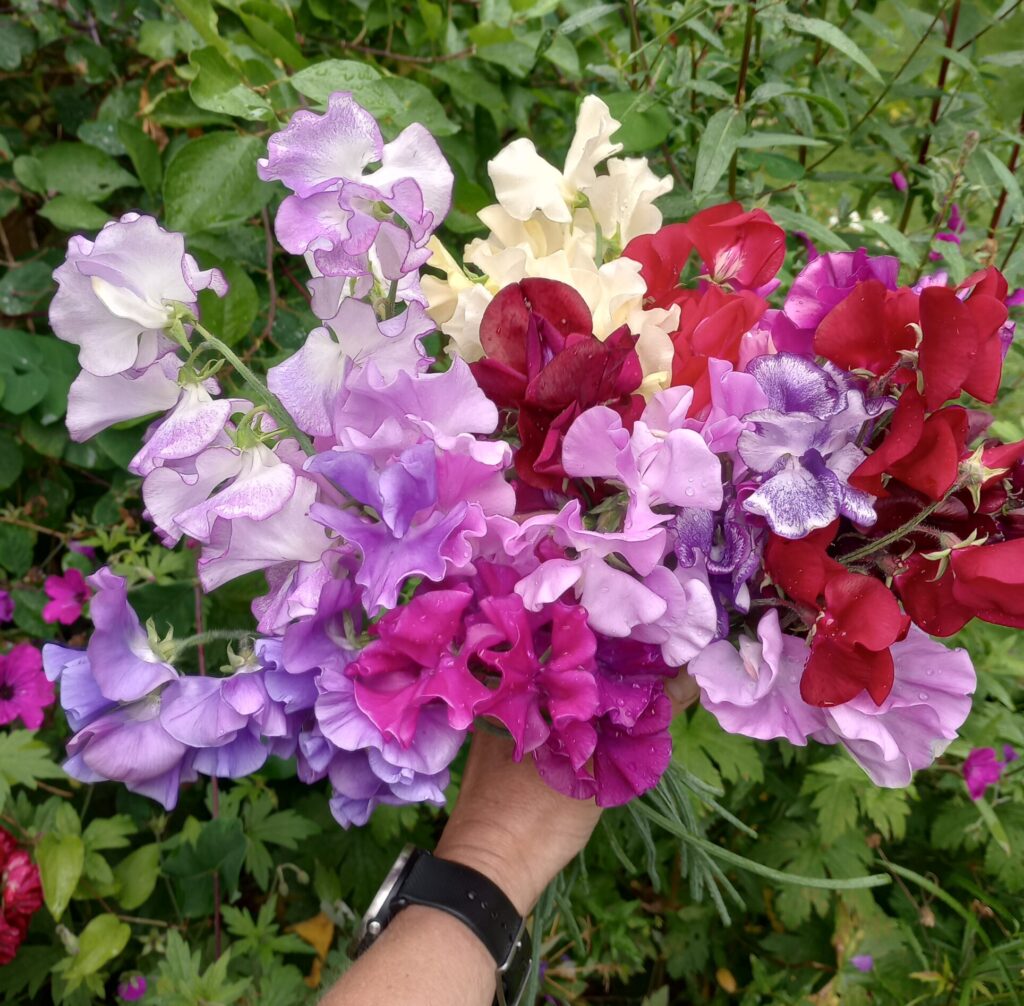 They do require some work to grow and that can put people off but its the pottering type of gardening which I love! Sowing of the seeds, planting out in spring, a bit of tying in when they start growing up the support, watering and feeding and then the biggest job is keeping them deadheaded and where is the chore in that, that just means you keep picking them before they go to seed. You start off picking the odd bloom but there comes a joyous moment when you have a big armful and can have multiple posies all over the house and give them out to your friends and family. Once in full flower I tend to do a big pick across the support once a week and that keeps them going. Its important that you do this as they will stop flowering if you don’t.
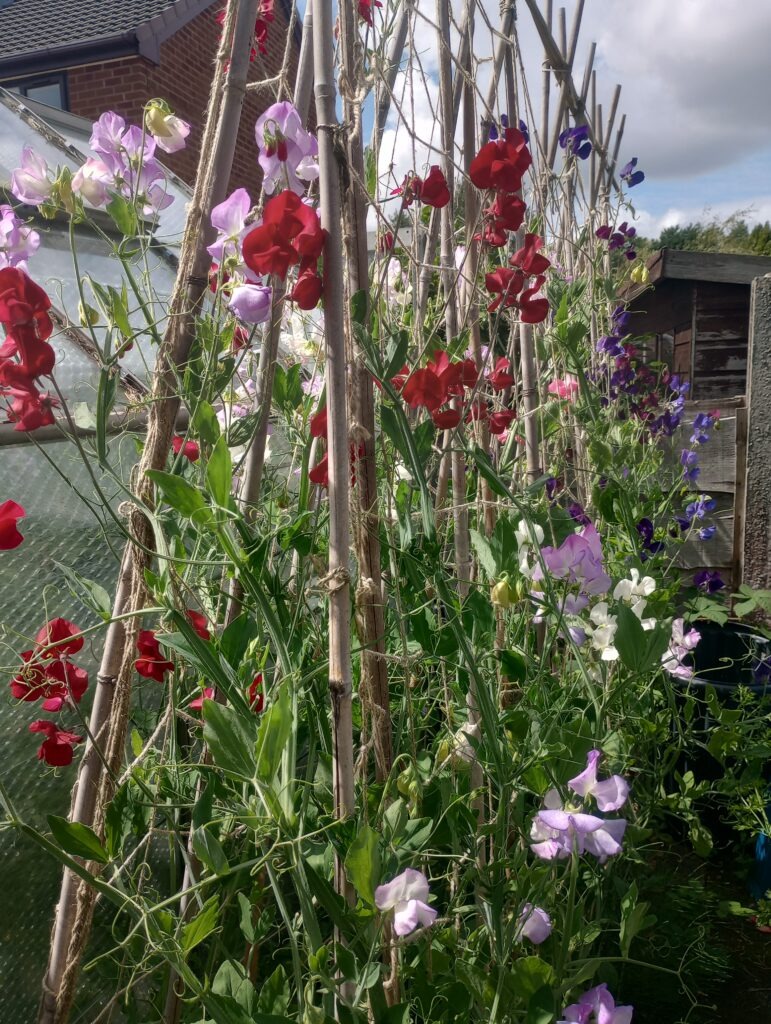 The great thing about sweet peas is there are lots of opportunities for sowing them and thus this can also enable you to extend the season of flowering. The simplest way of sowing is to do it in spring when the soil has warmed up, it is really simple to just push the round, hard seed direct into the soil where you want them to grow, they will germinate quickly and you will get flowers from them in July. No extra growing kit, like pots and compost, is needed just good garden soil.
Sweet peas are climbing plants and so you will need to give them a structure to grow up and the simplest of those is a wigwam from sturdy Hazel stems or bamboo canes that you can pick up from any garden centre. It needs to be fairly tall as they are vigorous growers and I wind twine around the canes up to the top of the wigwam to give the tendrils something to grab hold of as they climb upwards. You will need to tie the seedlings in to start with to give them some encouragement but usually after a while they find there own way. Put your support in first and then sow the seeds at the base of each cane (sow two seeds to improve the chances of germination), keeping an eye out for slugs when they first germinate.
Having said that I very rarely sow directly I’d rather sow undercover and into pots so that I have more control over planting and timings. This also means that you can sow earlier and get a head start and thus earlier flowers. So you can sow them in late autumn or even in the darkest days of winter but you will need to give them some protection against the harshest weather. 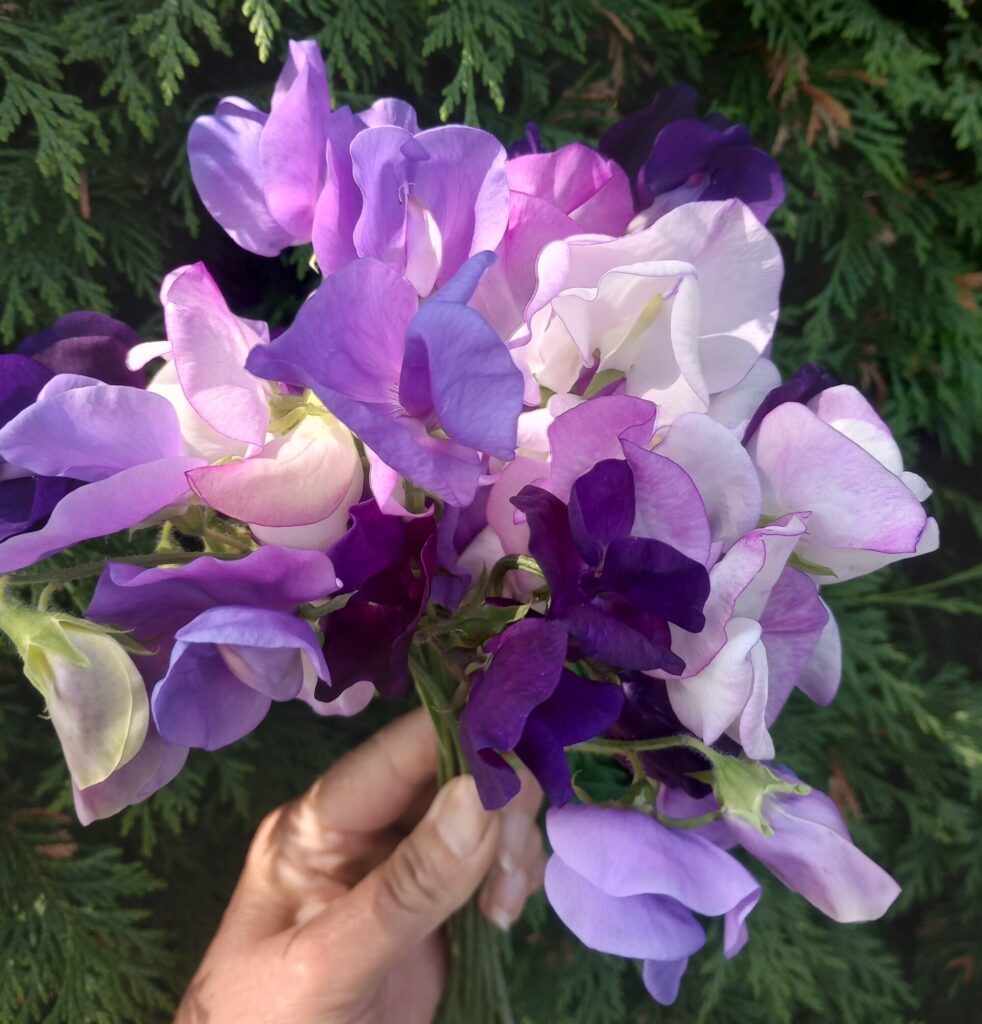 So I tend to sow my main batch in late autumn mostly because this is a quieter time for me and it gets them started early. So mid to late October time, and I tend to sow in root trainers or 9cm pots. The roots grow a long way down in sweet peas so whatever you grow them in they need some room to grow downwards. This is more important with autumn sowing as they are sat in their pots a lot longer than from a spring sowing. I use Melcourt Sylvagrow multipurpose compost which is nice and fine for seed sowing but also has a bit of nutrition in there to keep them going over winter. I sow one or two seeds per module or pot and that is so easy with sweet peas as they are little black balls and are easy to handle and push down into the compost about an inch down. They need warmth for germination so I tend to have them on a warm windowsill and within a few weeks there should be signs of germination.
However once germinated they need to be kept cool to slow down the growth as you don’t want them to get leggy. So I then move them into my unheated greenhouse. But you don’t need a greenhouse to grow them, Ben has a great system in that he uses plastic storage boxes to put the pots in, you can remove the lids on warm days and then the boxes just give them that little bit of winter protection. If they do get leggy or after they have produced 2 or 3 sets of leaves they can be pinched out. That just means nipping off the top growth down to the next leaf, leaving two sets of leaves below that point. Then you will get shoots emerging further down and you will get a nice bushier plant.
Keep an eye out for slugs and snails that can nip out those first growing tips and some people have an issue with mice who love sweet pea seeds and can pinch them before they get chance to germinate. I give them a liquid seaweed feed in late winter to give them a bit of a boost. I acclimatise the plants in the spring by bringing them out of the greenhouse on warmer sunny days. Then I plant them in early April time, they can sulk a bit when first planted but soon get going and then you just tie in and train as described above.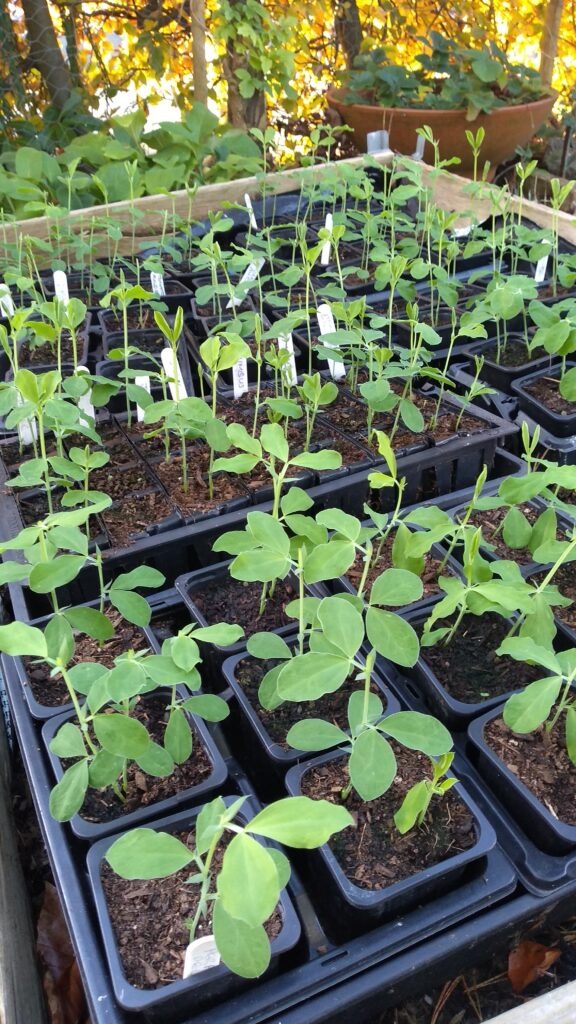 I then often do another sowing in late winter to have plants to go in slightly later and flowering later to extend the cutting season. But now even in mid-winter, on the darkest days, it is a great time to start your sweet peas for flowering earlier than spring sown seed, just follow the same advice as for autumn sowing. But there is a long window of opportunity for sowing as I said even directly in late spring. So if you haven’t sown any yet you have plenty of time.
Another thing to note is that they need good rich soil to grow in so I mulch the patch with well rotted compost, this feeds the plants but also helps retain moisture which is also essential to get good sweet peas. Once planted they need regular watering and ideally a liquid feed once a week, again I use a seaweed feed. Having climbing plants is a great way of using the vertical space of your cutting patch, so if you only have space for a small cutting patch then they are a must. But they also look great in a general garden setting especially a more relaxed cottage style garden.
The early flowers tend to be the best, so in June/July when its a bit cooler, the stem length is good but as the temperatures rise they can get shorter but don’t panic, when this happens I just tend to cut them further down the stems and pick them tendrils and all, this adds a lovely texture into the arrangements. This habit though is another reason why I try and sow early (autumn or late winter), especially with how the summers are getting hotter and drier, get them in as early as possible so they flower earlier in the summer when its cooler.
For more information on sowing them see the Higgledy garden seed sowing guide. 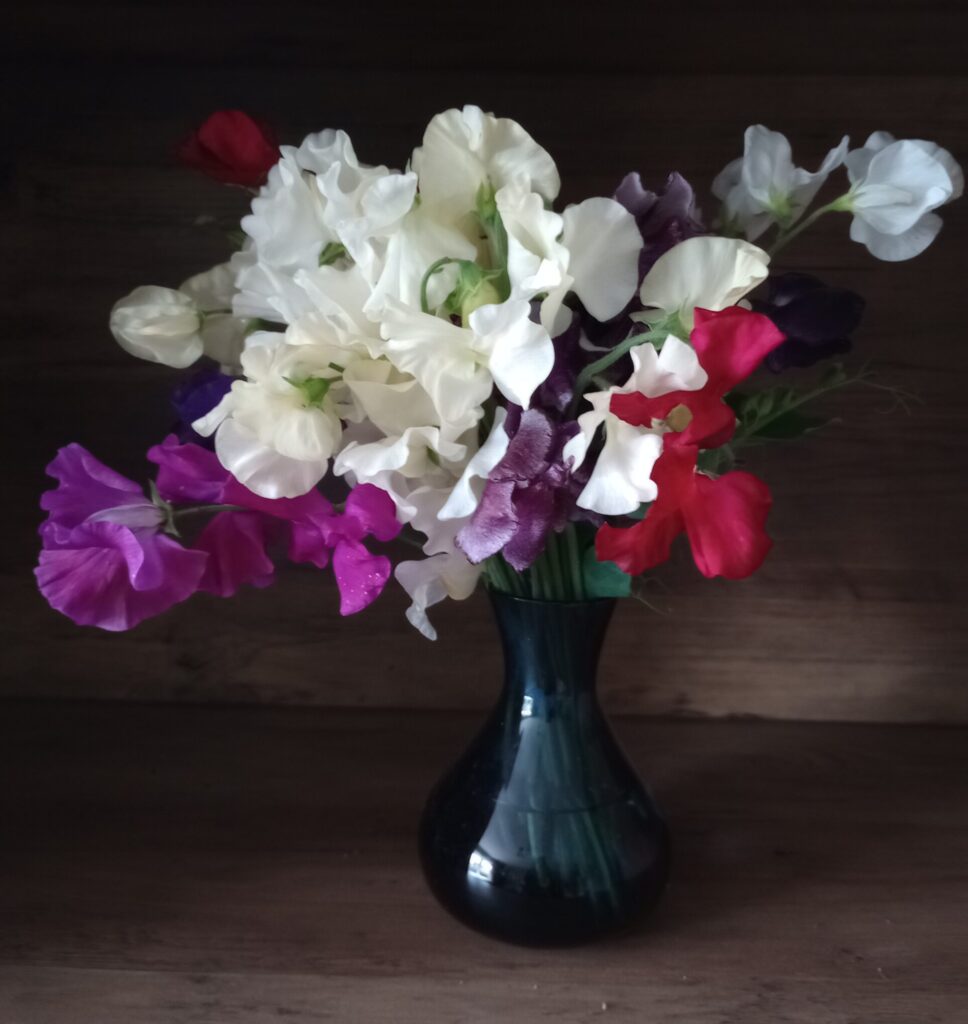 So this is how simple they are to grow it doesn’t have to be any more complicated than this, this will give you a wigwam full of beautiful blooms that will flower for as long as you keep picking them. You may see some people recommending soaking the seeds before sowing but I’ve had 100% germination in my seed sowing without doing this. As long as the seed is fresh (which it always is from Higgledy garden) you shouldn’t need to soak.
There are lots of different ways that you can support your plants, I grow mine up a mixture of A-frame or wigwams for ease, but they can go a bit crazy when they get to the top of the support, where it narrows. So a support that doesn’t narrow at the top are the ideal as it allows more consistent growth and flowering. Many growers recommend a circle of canes to make a column like structure so that they don’t all squash together when they get to the top. Or if you want perfect blooms then grow a single stem (cordon) up a tall cane. These last two types are best if you are growing for shows. But honestly if you are growing them to have a mass of colour and fragrance in your garden then wigwams do look lovely and fit into a cottage garden scheme perfectly.
There is also lots of talk about nipping out the growing tendrils but really that’s only if you are growing for shows or competitions, and obviously if you nip out those tendrils you will need to do more work to keep tying them to the support as essentially you are removing their climbing mechanism for their growth. Its true the tendrils can be a bit of a pain as they can attach to your flower stems and bend them out of shape but really this is a minor problem! I tried religiously removing them one year but it was a total faff and as you know at Higgledy we can’t be doing with faff so have never bothered since.
Sweet peas are not massively long-lived in a vase but they are so floriferous that the next picking will be ready as those are going over so its not a problem. If you really want to try and extend the time in the vase pick them when the first one or two flowers are out but the bottom flowers aren’t quite yet.
There is such a range of varieties to choose from in a kaleidoscope of colours from romantic pastel shades to rich dark jewel like colours, the only colour missing in the colour spectrum is yellow but you can forgive them for that. We sell a number of single varieties of sweet peas in a range of colours from the soft delicate pastel shades of ‘Leamington‘ pale lilac, ‘Noel Sutton’ a lovely blue shade, ‘Alan Williams’ pale blue flushed pink and ‘Mrs R Bolton’ soft peachy pink to the richer darker jewel like colours of ‘Winston Churchill’ a dramatic deep red, ‘Beaujolais’ a rich deep purple almost black, ‘Flagship’ a dark purple with blue tones. Plus we have a lovely pure white form, ‘Swan Lake’. They have been chosen for having good scent as well as a good cutflower. However if you are just growing for scent then ‘Cupani’ is one of the best, or ‘Painted Lady’ with smaller two-tone pink and white blooms. We have a couple of new varieties this year, the first is ‘Heathcliff” which I have grown in the past and is a really good blue sweet pea, with lighter and darker tones depending on the light. Second is one I grew for the first time last year and really fell in love with it. ‘Mollie Rilstone’ is a gorgeous delicate cream blushed with pink/peachy tones.
Here are a few of the Higgledy varieties from 2025, from top left to right, ‘Flagship’, ‘Swan Lake’ , ‘Sir Jimmy Shand’, ‘Winston Churchill’, ‘Leamington’, ‘Noel Sutton’, ‘Mrs R Bolton’ and ‘Beaujolais’.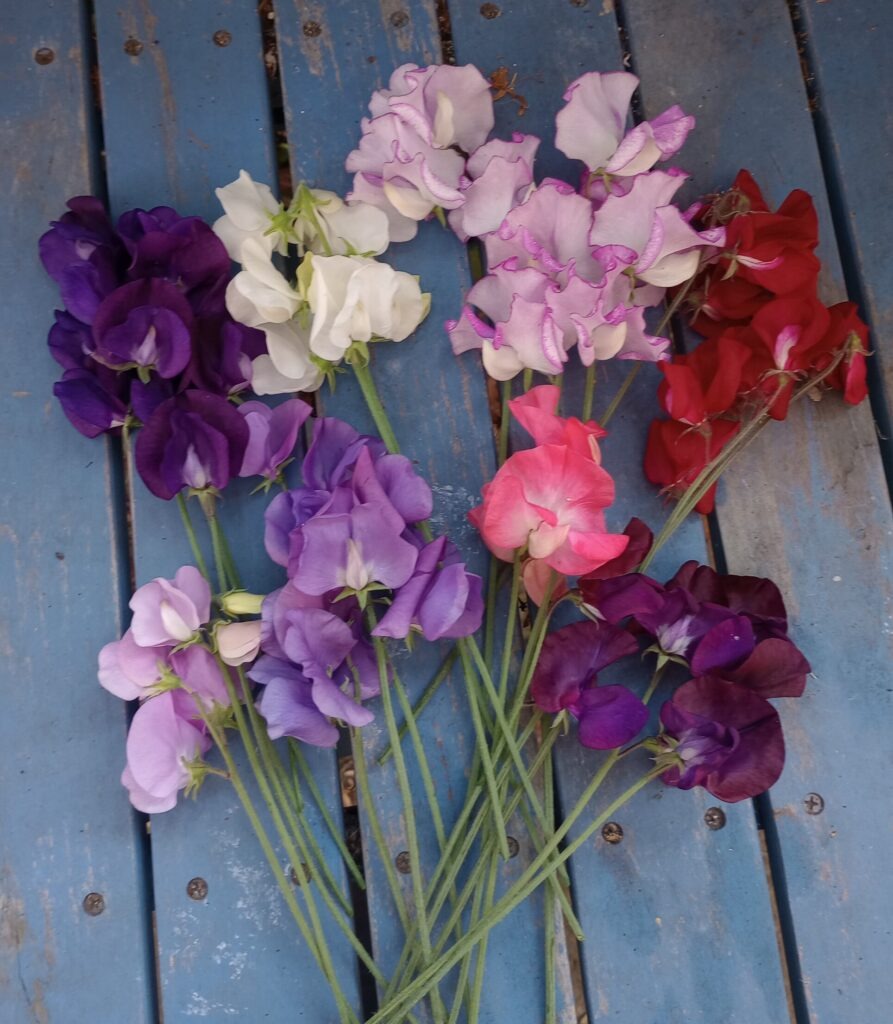 If you can’t choose between the array of colours of the single varieties then we have some lovely mixes in the shop as well to keep things simple, like ‘Perfume Delight’ and ‘Mammoth’ both selected for good perfume and great flowers for cutting.
I love just a big bunch of them in a simple jug or jamjar but I also love using them in mixed arrangements with other flowers out at that time like Cornflowers, Echium, Feverfew, Larkspur, Salvia ‘Oxford Blue’, Orlaya grandiflora, Alchemilla mollis and Canterbury Bells.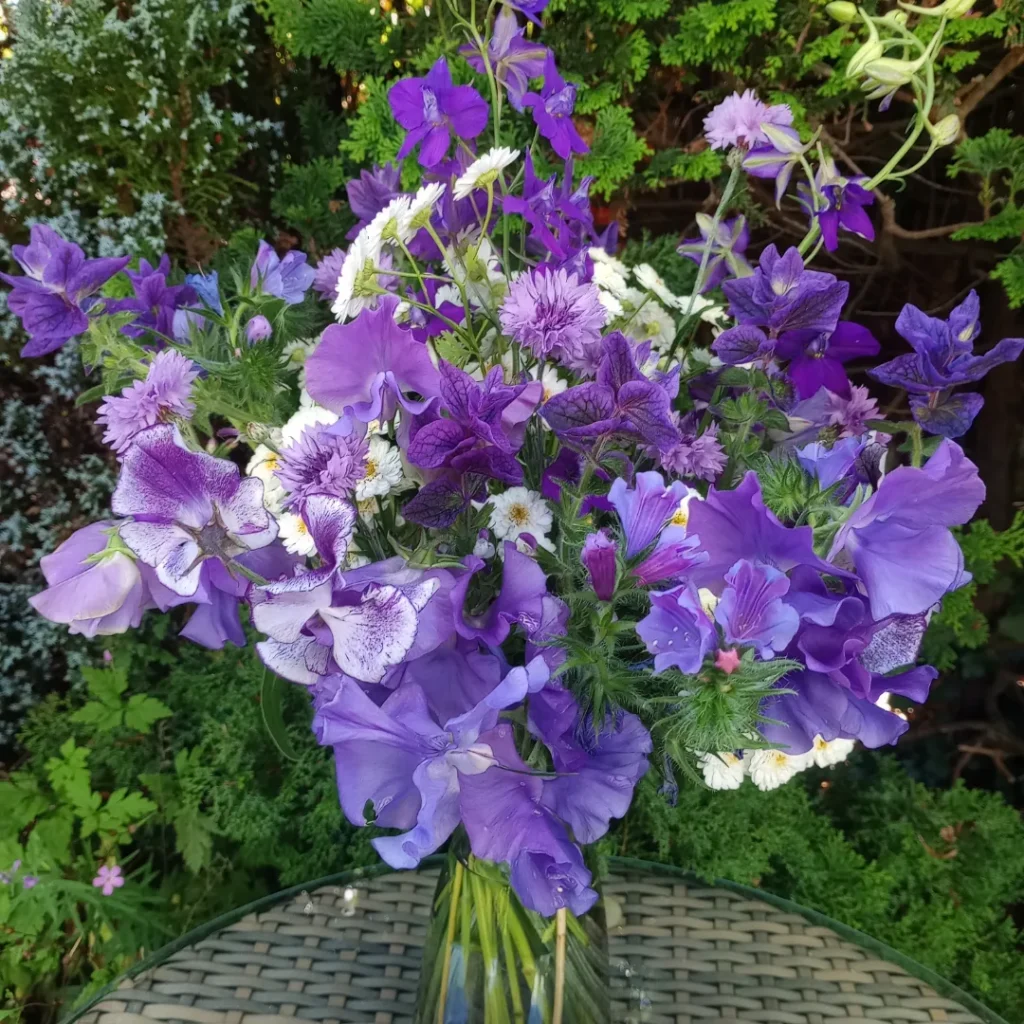 So I hope I have convinced you to get some sweet peas for your garden and cutting patch to add some romance and glorious scent into your summer. Happy Sowing!
We currently have a special 25% off offer for sweet pea seeds at the moment, a fabulous bundle of 6 sweet pea varieties.
Higgledy Anne
(I’m on Instagram anne_hinks if you fancy a follow)