
Perennial seed sowing guide
Autumn seed sowing time is upon us and now is a great time for sowing hardy annuals such as Cornflowers, Corncockle and Ammi, see the simple guide to sowing hardy annuals blog. But it also a good time for sowing many perennials from seed. Autumn is a great time for sowing as the temperatures are still warm and the soil is often moist so germination is usually fast. You can get them growing into a small plant before the year gets too cold and then they will sit over winter and start into growth again in the spring. But before we get into sowing and all the details it might be useful at this point to talk about the difference between annuals and perennials and why perennials are a great addition to your cutting garden. So annual flowers are plants that you sow, usually in spring, they get planted out and they flower through the summer. Cutting them makes them produce more flowers but eventually they set seed and die. Obviously you can collect seed from them or many self-seed themselves but basically the following year you start again with the seed sowing process. That might seem a lot of hard work to you (I actually love this process so it’s no hardship!) so you might look to perennials.
Perennials are simply a plant that you sow once, or buy as a plant, plant in your garden and then it comes back year after year. Some die back completely over winter but then grow back again the following year and some retain a rosette of leaves over winter. Maybe this sounds a much better option but there really are pros and cons to each specifically if you are thinking about a cutflower garden.
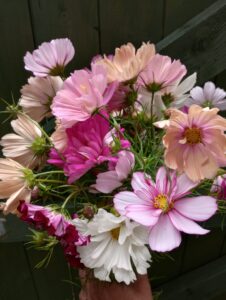
Many cut flower gardens are based around annuals and the big advantages are that they are highly productive, cheap and relatively easy to grow. However, they can be quite labour intensive, they need keeping fed and watered and can be prone to certain ‘pests’ like slugs which can decimate a crop before you even get started. They can also be more sensitive to the vagaries of the weather and their season for cutting is usually May to September. This summer has been a really challenging year if you have been growing annuals with the dry weather and really hot temperatures. There are definitely more resilient annuals that are better able to cope with this such as Cosmos and Snapdragons. But annuals do need watering to keep them flowering well and its definitely making us think about water resources in our gardens.
But they are great value for money, if you think about the price of a packet of seeds and how many plants that you can get from that packet, you can fill your cutflower garden cheaply and produce lots of cutflowers through the summer. Plus if you select certain varieties they can be a truly cut and come again crop, the more you cut the more you can harvest. I’ll never be without my swathes of Cosmos, my tall stands of Sunflowers or my wigwams of Sweet Peas but I’m also a big fan of growing perennials for cut flowers.
As well as working for Higgledy Garden I also work part time at Bluebell cottage garden nursery which specialises in hardy perennials and I have a real love for them and have plenty of them in my garden. Perennials tend to have a specific ‘season’ for flowering so maybe don’t flower as prolifically as annuals. But if you select a good range of flowering times they can really extend your season for cutting, some can also reflower a few times if cut back after their first flush of flowers. Some flower in the late winter and early spring giving you good cutting material when the annuals are starting to be sown or some flower in late summer or in autumn when some of your annuals may be running out of steam. Plus there are plenty that flower through the summer. They tend to be less labour intensive in the cutting patch, once established they need less watering and feeding than annuals. Though I have to say that this summer has even been a challenge for perennials, many of my early summer flowering perennials flowered for a shorter time and crisped up but they just go dormant through the drought as soon as the rains came at the end of August they soon greened up again and some even started to flower again. They are as confused as us by the weather. But overall they are more tolerant to weather conditions. But one of the best reasons for using perennials in your cut flower arrangements is that it brings in a real seasonality into your bouquets that is hard to beat.
Another advantage is certain perennials like particular conditions in the garden, most annuals need a sunny spot and can struggle in the shade but some perennials thrive in shade and are good for cutting. So you can select varieties to suit all parts of your garden. There is great variation in perennials regarding cutting season, some just have one flowering time and once picked then that’s the flowers done but others can keep producing through the summer. So you have to choose your varieties carefully and there is lots of great advice out there but I’m always experimenting with new ones. Obviously they need a permanent spot in the cutting patch so you have to account for that or you can just raid your garden for stems for cutting. My garden more and more is becoming a real mixture of perennials and annuals in both the borders and the beds specifically set aside for cutflowers.
Its clear that there are pros and cons to each and so I like to have a mix of the two in my cut flower garden, I’ve got some beds that I leave mostly for annuals and have a couple of beds that contains perennial plants for cutting. Plus then I have my garden borders which I often pick a few stems from. I’m not a flower farmer, I’m just growing mostly for myself so I don’t need lots of everything so picking a few stems from plants in the garden borders is not a big deal.
So you have options if you want to grow perennials you can buy them as plants or you can grow from seed. One of the main advantages of growing perennials from seed can be if you want large numbers of plants, its much cheaper to buy a packet of seeds and grow multiple plants than sourcing that same number of plants from a nursery. But we have to be honest here, in terms of seed sowing, perennials are not always as easy as annuals and germination can be more temperamental. You will need to start them off indoors, they are not really good ones for direct sowing and most need some warmth for germination.
So here at Higgledy when it came to selecting some perennials to sow from seed we have selected varieties that pretty tough and dependable in the garden. Ones that if you sow early enough should flower in their first year (though we can’t guarantee this and will depend on lots of outside variables) and also we have gone for varieties that are reliable for germination.
Here are a few tips for seed sowing. There are a couple of windows that are great for seed sowing, autumn sowing and early spring sowing. It is good to sow as early as you can so that you can hopefully get flowers in the same year. Or sow in autumn for flowering the following summer. Rather than sowing directly into the soil I sow my perennials into pots or seedtrays and keep them undercover until the risk of frosts have passed. They are planted out into their final positions in late spring once they have developed into a sturdy plant. For more information on seed sowing for individual varieties see the Higgledy Garden seed sowing guide.
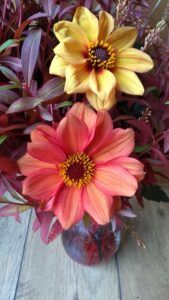
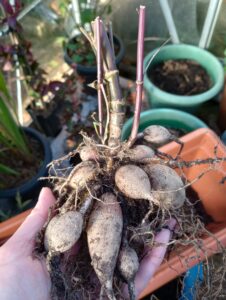
Firstly, the Dahlias (‘Bishops Children’ and ‘Cactus’) are easy from seed but I wouldn’t sow these in the autumn. They are great to sow in early spring and as long as you keep them protected from frosts and growing steadily you can almost guarantee flowers in late summer into autumn. Just sow in a pot or scatter in a seed tray with peat-free compost and cover seeds lightly with compost. They need a bit of warmth, so a propagator or inside on a warm windowsill, but they germinate quickly and can be potted on into 9cm pots. They need protection until all risk of frosts has passed. I love growing these from seed, they are brilliant. I’ve grown D ‘Bishops Children’ a few times now and it is so fantastic, beautiful dark foliage and bright single flowers in shades of orange and red that the bees adore too. At the end of the year they will have developed big chunky tubers that you will need to protect from frost over winter (depending on how cold it is where you live you can either leave in the ground and mulch or lift and store in a frost free place). If you lift them then pot them up in the spring or plant them out after the frosts and they will grow into bigger plants the following year.
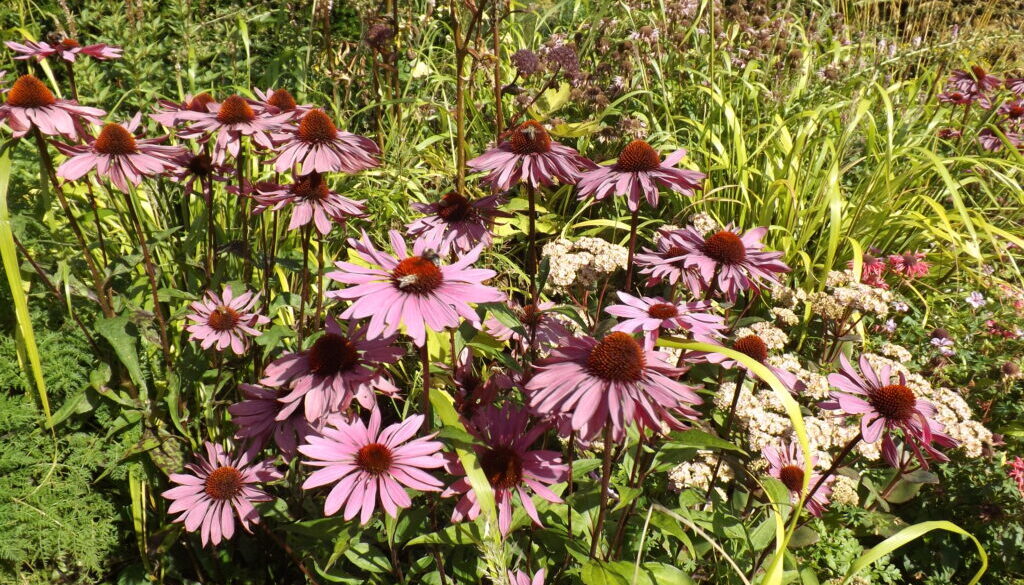
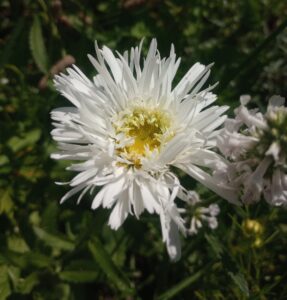
The other hardy perennials (Chrysanthemum ‘Crazy Daisy’, Feverfew, Echinops ritro, Echinacea ‘Primadonna Pink’ and Gaura ‘The Bride’ all have similar requirements. Again they need to be sown in the indoors as they need some warmth to germinate, sow thinly on the surface of peat-free compost, but don’t cover as they need light to germinate or you can cover with a thin layer of vermiculite. Patience is required!! Germination can be slow. If you get no germination they may need some cold stratification to break the seed dormancy. This just means put them somewhere cold for a couple of weeks and then bring them back into the warmth again. Or you can cheat and put the packet of seed in the fridge for a few weeks before sowing and this can break down the dormancy of the seed. Or obviously is you are autumn sowing just leave the seed tray out over winter and the cold should break the dormancy and they will germinate in early spring as it warms.
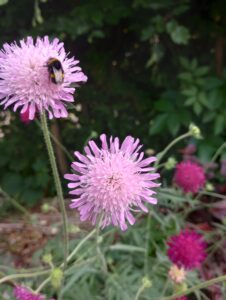
The Knautia ‘Melton Pastels’ is often recommended to sow in the autumn and you could potentially sow those directly and then they will naturally have a cold spell over winter. In fact I’ve spotted some seedlings of Knautia in my garden in late summer so that just shows that autumn is a good time for germination. Or just sow as for those above. For me last year these all germinated well with no special tricks just some warmth. Again they will need pricking out and potting on and keeping under cover until the frosts have passed.
These all prefer a sunny spot in the garden. They are all great for cut flowers and are long flowering particularly if you keep deadheading them. But another big advantage is once you have them in your garden you can easily make more stock by taking cuttings or division. Or collect seed off them and grow more from seed. I have a lovely double Feverfew in my garden that seeds all over the place.
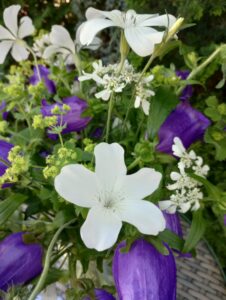
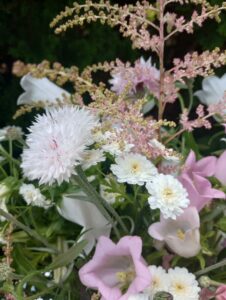
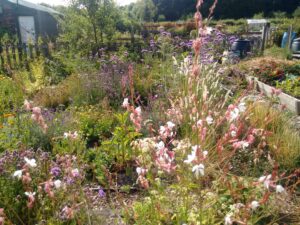
So hopefully I’ve convinced you that perennials are a great addition to your garden and cutting patch. You might also want to have a look round your garden in autumn and collect seed from some of your perennials and sow them and see what you get. Perennials that I collect seed from in my garden are Cenolophium denudatum, some Astrantias, Cephalaria gigantea, Silene vulgaris and Stachys. There are many others that I use in my garden too that are worth investigating if you want to try some other varieties. If you follow me on Instagram I always provide the ‘ingredients’ for my arrangements so that you can see what I’m using. These perennials have been generally bought in pots (mostly from Bluebell Cottage nursery!) and whilst a bit more expensive than growing from seed, the initial investment is worth it as they will keep coming back year on year. For foliage I love Alchemilla mollis, Sedums, Mints and Oreganums. For froth I like Cenolophium denudatum (beautiful cow parsley like flowers), Achillea ‘The Pearl’, Silene vulgaris, Polemoniums and Sanguisorbas. For spiky flowers I might go for Lysimachia clethroides, Lythrum salicaria and Stachys ‘Hummelo’ and for more focal flowers I might go for Geums, Centaurea, Astrantias and Helianthus. But I’m trying new things all the time, have a look and see what is in your garden!
Happy sowing,
Higgledy Anne